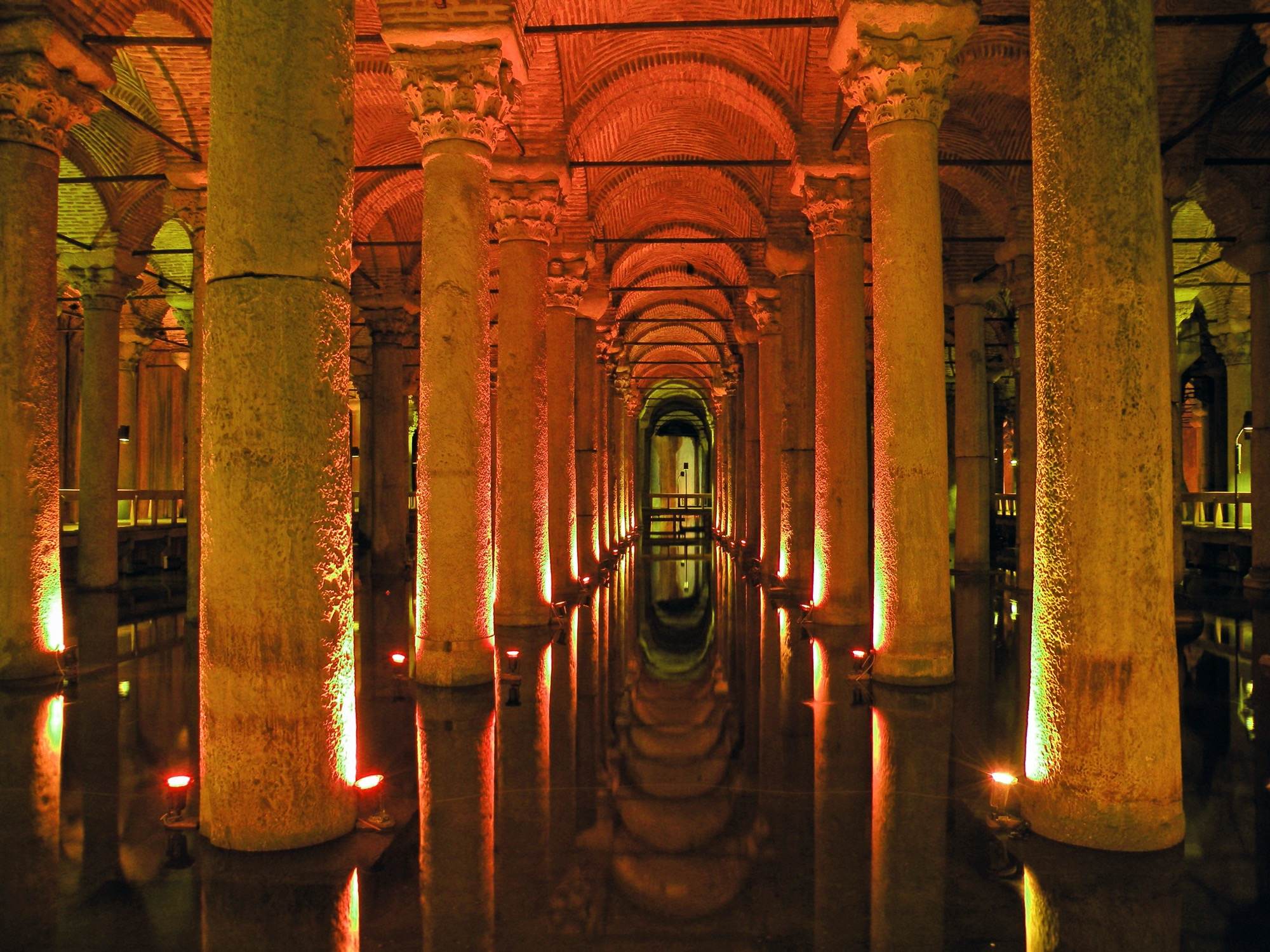

The forest of columns
As soon as you reach the bottom of the steps, the space opens out in every direction: 336 marble columns, 9 metres tall and set in 12 rows of 28, hold up brick vaults that fade into the half-light. Walkways carry you over the water, which reflects every column and makes the space feel even deeper. Many of the columns were reused from older buildings, which is why you'll spot different capitals and styles.
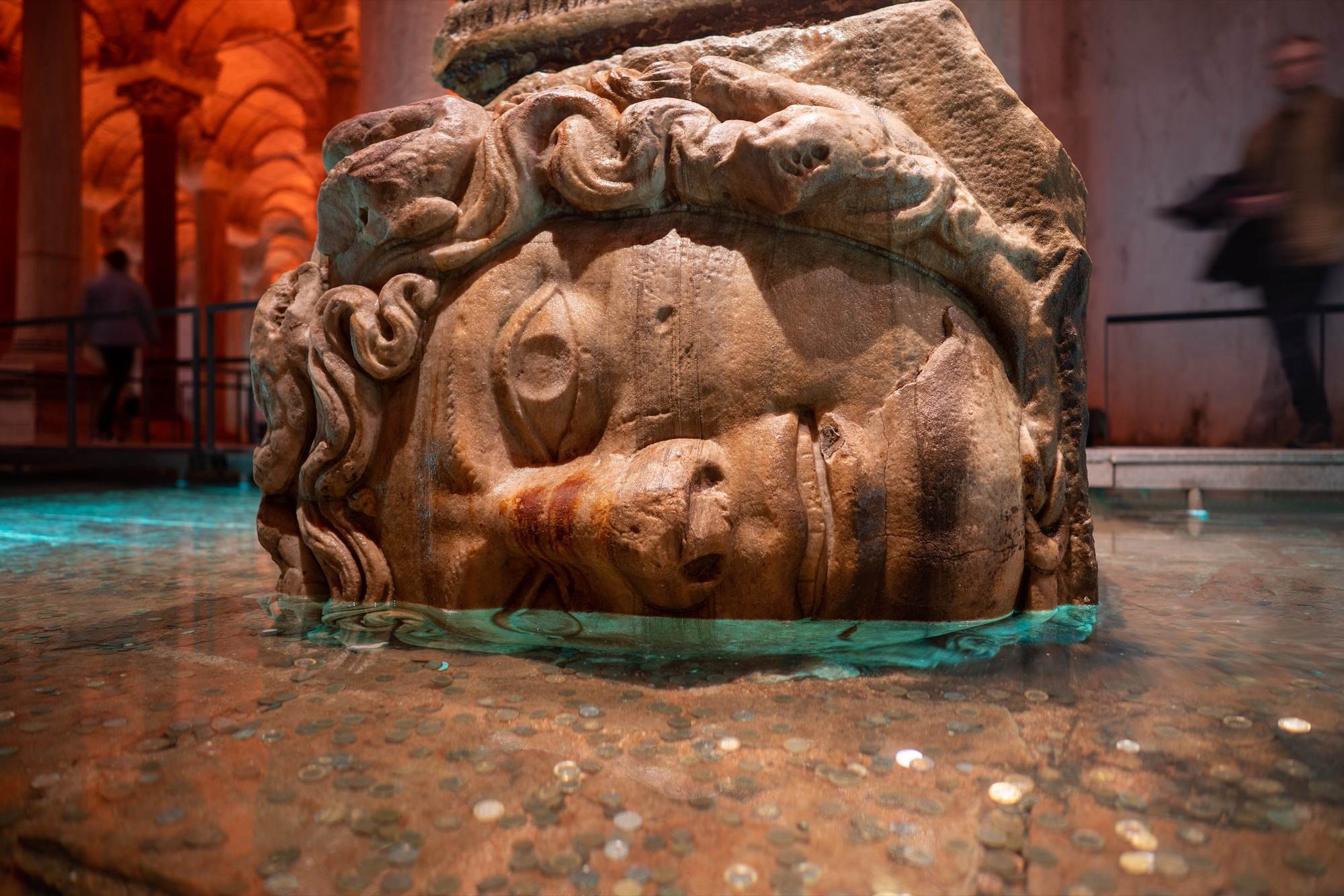
The Medusa heads
In the north-west corner, two columns rest on blocks carved with the face of Medusa: one is set upside down and the other on its side. Nobody knows for sure where they came from. Most likely they were taken from a late Roman building and simply used as bases. They're the photo everyone wants to take home.

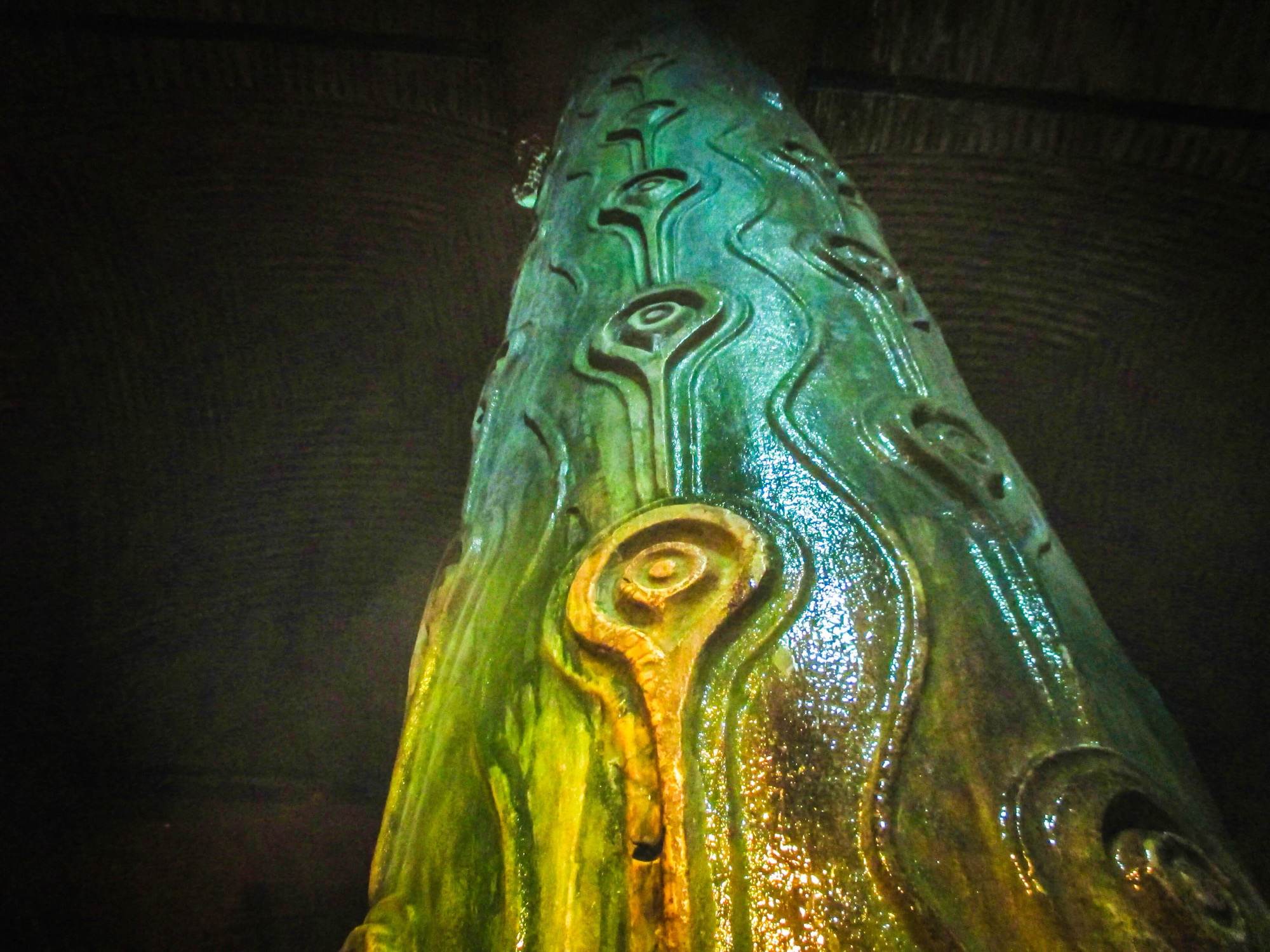
The Hen's Eye Column
One column stands out from the rest: it's carved with hen's eyes, slanting branches and teardrops, which is why many people call it the "weeping column". Its decoration recalls 4th-century columns, another reused piece that's now one of the most photographed spots in the cistern.

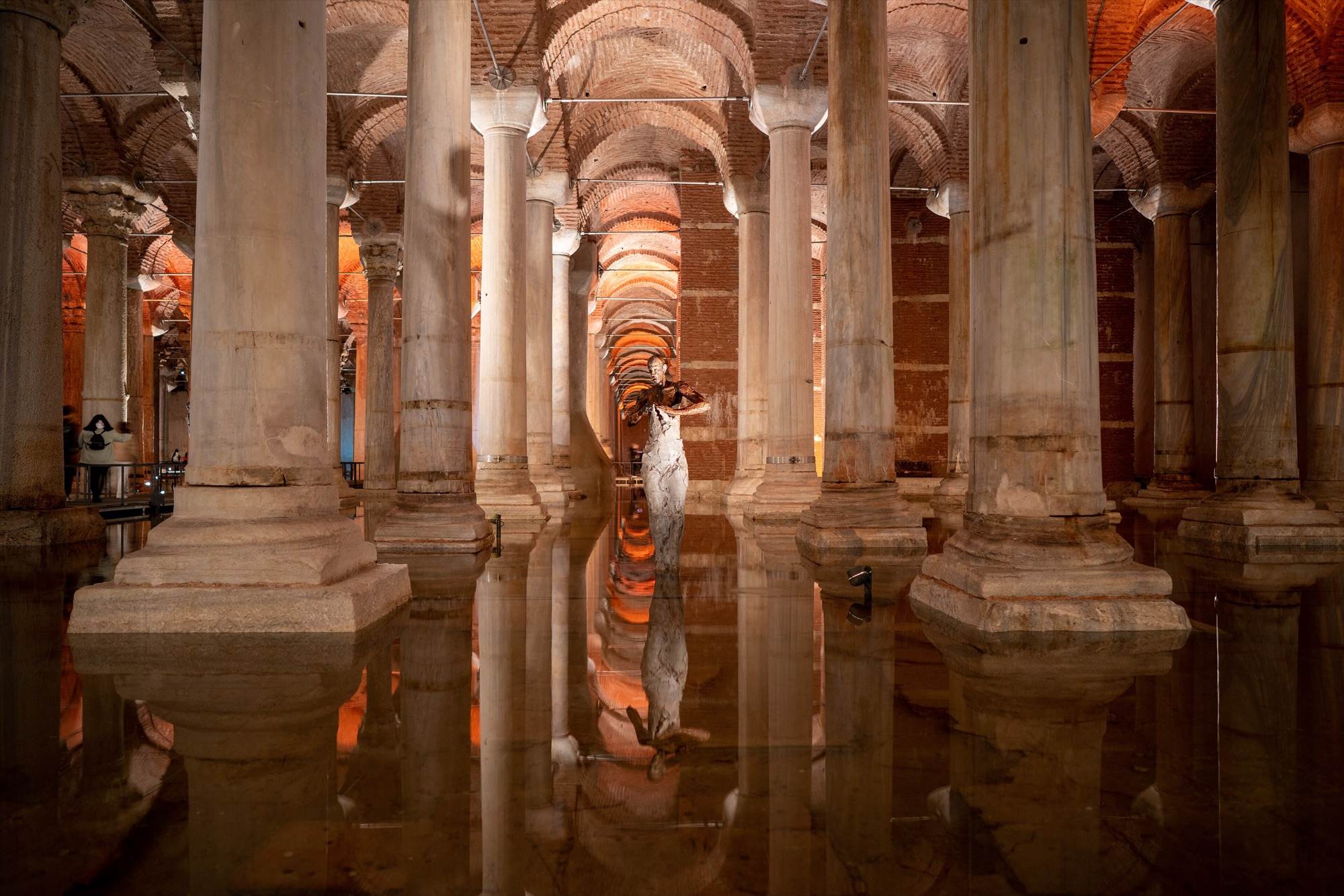
Contemporary art and light
Since the restoration that finished in 2022, the cistern pairs its Byzantine architecture with new lighting and contemporary art installations placed among the columns. The result is one of the most photogenic visits in Istanbul, unlike any other monument in the city.

A film star
The cistern appears in From Russia with Love (1963), the second James Bond film, and it has been part of Istanbul's most mysterious side ever since.
See it with a guide
A guide takes you straight to every detail and tells you its story, with skip-the-line entry included.
Basilica Cistern Guided Tour & Blue Mosque Audio Guide
A guide shows you round the cistern, and you get an audio guide to visit the Blue Mosque afterwards.
Check price & dates on GetYourGuide (opens in a new tab)Istanbul: Basilica Cistern Skip-the-line Entry & Guided Tour
Skip-the-line entry and a guided visit that brings the columns and the Medusa heads to life.
Check price & dates on GetYourGuide (opens in a new tab)
Common questions
Why are the Medusa heads upside down and sideways?
Nobody knows for certain. The most accepted explanation is practical: they were used as bases to level the columns and set in whichever position fitted best.
Can I take photos?
Yes, and the cistern is one of the most photogenic places in Istanbul. Bring a charged phone: in the low light, the reflections on the water look spectacular.
What was the cistern for?
It stored water for the Great Palace of the Byzantine emperors and the buildings of the imperial quarter. It could hold up to 80,000 cubic metres.